
Primal Movement Workout: A Comprehensive Guide
Discover a holistic approach to fitness! Primal movement prioritizes natural, instinctual motions for improved well-being, echoing how humans thrived for millennia.
Reclaim your body’s innate capabilities. This guide explores the evolutionary roots and benefits of primal movement, offering routines for all fitness levels.
Embrace fundamental patterns. Learn to squat, hinge, push, pull, crawl, and roll – movements essential for functional strength, mobility, and a resilient body.
What is Primal Movement?
Primal Movement represents a return to the fundamental ways our bodies were designed to move – before the constraints of modern life and specialized exercise. It’s about rediscovering the natural, instinctual patterns of motion that humans utilized for survival and thriving throughout evolutionary history. Think of how babies move; exploring their environment through crawling, rolling, and reaching – these are the core principles.
Unlike many conventional workouts focused on isolating muscle groups, primal movement emphasizes integrated, full-body movements. It’s not about achieving a specific aesthetic, but rather about enhancing functionality, improving mobility, and fostering a deeper connection with your body. This approach acknowledges that our bodies are happiest when engaged in varied, natural movement, fueled by proper nutrition and hydration.
Essentially, it’s about channeling your inner instinctual movement to unlock improved core stability, flexibility, and overall well-being. It’s a rejection of rigid routines and a celebration of the body’s innate ability to adapt and move freely;
The Evolutionary Basis of Primal Movement
Human movement evolved over millennia shaped by the demands of survival – hunting, gathering, climbing, crawling, and adapting to diverse terrains. Our bodies weren’t designed for sitting at desks or repetitive machine-based exercises. Primal Movement seeks to reconnect us with this ancestral heritage.
For generations, humans relied on full-body, multi-planar movements to navigate their environment. These movements built strength, flexibility, and coordination organically. The modern fitness industry often isolates muscles, neglecting the integrated nature of how our ancestors moved. This disconnect can lead to imbalances and limitations.
Primal Movement acknowledges that our genetic blueprint still carries the memory of these ancestral patterns. By incorporating movements like squatting, hinging, pushing, pulling, and rolling, we tap into this innate potential, promoting optimal physical function and a sense of embodied well-being. It’s a biological imperative to move naturally;
Benefits of Primal Movement Training
Primal Movement offers a cascade of benefits extending far beyond traditional fitness paradigms. It’s about restoring natural movement patterns, leading to improved physical and mental well-being. A key advantage is enhanced mobility and flexibility, as these movements encourage a full range of motion in joints.
Furthermore, primal exercises intrinsically build enhanced core stability. Unlike isolated core work, these movements require constant engagement of the core to control and coordinate the body. This translates to increased functional strength – strength applicable to real-life activities.
Beyond the physical, Primal Movement fosters better posture and body awareness. By reconnecting with fundamental movements, individuals develop a deeper understanding of how their bodies move in space. This can alleviate pain, prevent injuries, and cultivate a more embodied sense of self. It’s a holistic approach to fitness.
Improved Mobility and Flexibility
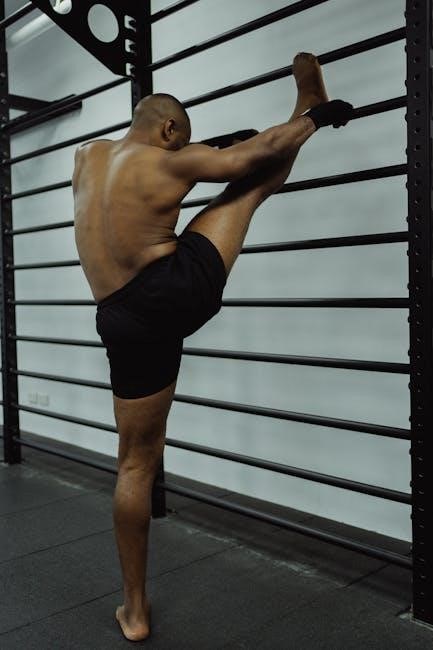
Primal movements are inherently designed to unlock and enhance mobility, addressing stiffness often caused by modern, sedentary lifestyles. Unlike static stretching, these dynamic movements take joints through their full range of motion, naturally increasing flexibility. Think of a child crawling – that’s fluid, unrestricted movement!
Patterns like crawling and rolling specifically target the spine, hips, and shoulders, areas commonly restricted in adults. Squatting and hinging improve ankle, hip, and hamstring flexibility. This isn’t about achieving extreme flexibility; it’s about restoring the natural, healthy range of motion your body is designed for.
Increased mobility translates to improved performance in all other activities, from sports to everyday tasks. It also reduces the risk of injury by allowing your body to move more efficiently and adapt to stress. Prioritizing these movements is an investment in long-term joint health and overall well-being.
Enhanced Core Stability
Primal movement isn’t about six-pack abs; it’s about deep, functional core strength. These movements necessitate constant engagement of the core muscles – not just the rectus abdominis, but the entire network of muscles that stabilize the spine and pelvis. Crawling, for example, demands anti-rotation and anti-extension, forcing the core to work continuously.
Unlike traditional crunches or planks, primal movements integrate core stability into full-body patterns. This means the core isn’t working in isolation, but in coordination with the limbs and spine, mirroring real-life movements. Hinging and squatting also require significant core engagement to maintain a neutral spine.
A strong core is foundational for everything you do. It improves posture, reduces back pain, and enhances power transfer during athletic activities. By prioritizing primal movements, you’re building a resilient core that supports your body through all its movements, promoting long-term health and functionality.
Increased Functional Strength
Primal movement builds strength that translates to everyday life. Unlike isolating muscles with machines, these exercises emphasize integrated, full-body movements. This approach develops strength in the patterns you actually use – lifting, carrying, twisting, and navigating your environment.
Crawling, for instance, builds incredible upper body and core strength while simultaneously improving coordination and shoulder stability. Squatting and hinging strengthen the posterior chain (glutes, hamstrings, back), crucial for powerful movements and injury prevention. Pushing and pulling build upper body strength in a functional manner.
This isn’t about maximizing your bench press; it’s about becoming more capable. Functional strength improves your ability to perform daily tasks with ease, reduces your risk of injury, and enhances your overall quality of life. It’s strength that serves a purpose beyond the gym.
Better Posture and Body Awareness
Primal movement inherently cultivates better posture and a heightened sense of body awareness. By reconnecting with fundamental movement patterns, you begin to understand how your body is meant to move and align. Many modern lifestyles promote prolonged sitting and repetitive motions, leading to postural imbalances.
Exercises like crawling and rolling challenge your body to stabilize and coordinate, forcing you to engage core muscles and maintain proper spinal alignment. The focus on natural movement patterns encourages you to become more attuned to your body’s signals – recognizing tension, imbalances, and areas needing attention.
This increased awareness translates to improved posture throughout the day, reducing strain on joints and muscles. You’ll naturally begin to move with greater efficiency and grace, fostering a stronger connection between your mind and body.
Key Primal Movement Patterns
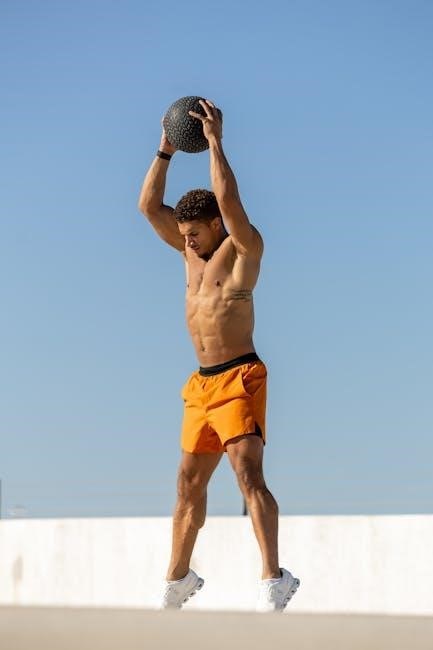
Unlock your body’s potential! Explore foundational movements – squatting, hinging, pushing, pulling, crawling, and rolling – mirroring natural human actions for optimal function.
Squatting
The cornerstone of primal movement, squatting is a fundamental human position ingrained in our evolutionary history. Unlike rigid, machine-based squats, primal squatting emphasizes natural variations – wide stance, narrow stance, deep squats, and even asymmetrical variations.
Focus on maintaining a neutral spine and allowing your body to find its natural range of motion. Prioritize ankle mobility and hip flexibility to achieve a comfortable and effective squat. Beginners can start with assisted squats, using a stable object for support.
Progress to bodyweight squats, then explore loaded variations like goblet squats or even carrying objects while squatting, mimicking how our ancestors would have gathered resources. Squatting builds lower body strength, improves hip mobility, and enhances core stability – essential components of overall functional fitness.
Remember to listen to your body and avoid forcing movements beyond your current capabilities.
Hinging
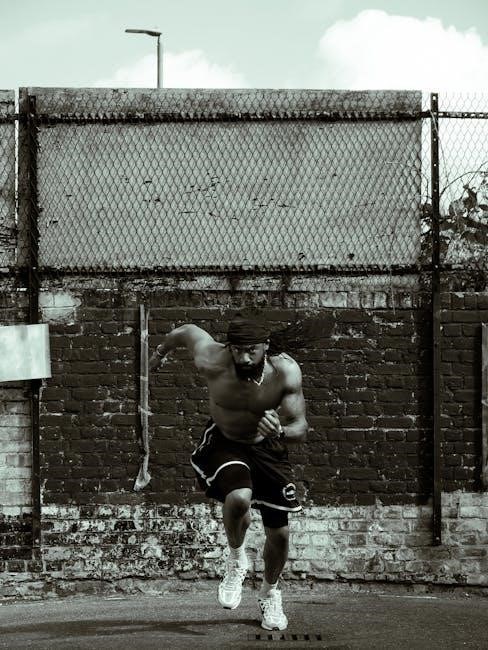
Hinging is a primal movement pattern centered around hip dominance, differentiating it from squatting which is more knee-dominant. Think of picking something up off the floor – that’s a hinge! This movement is crucial for developing posterior chain strength (hamstrings, glutes, and lower back).
Proper form is paramount. Maintain a neutral spine, engage your core, and push your hips back as if closing a car door with your glutes. Keep a slight bend in your knees throughout the movement. Beginners can practice with a dowel rod along their spine to maintain proper alignment.
Progress from bodyweight hinges to loaded variations like kettlebell swings or Romanian deadlifts. These exercises build explosive power, improve posture, and enhance athletic performance. Hinging strengthens the muscles responsible for everyday movements like lifting, bending, and walking.
Focus on controlled movements and avoid rounding your back to prevent injury.
Pushing
Pushing movements are fundamental to primal movement, reflecting our natural ability to interact with and manipulate our environment. These exercises build upper body strength and stability, engaging the chest, shoulders, and triceps. Think about pushing open a heavy door or pushing yourself up from the ground.
Variations range from simple wall pushes to more challenging exercises like push-ups and handstands. Start with regressions – like incline push-ups against a wall or on your knees – to build strength and proper form. Focus on maintaining a straight line from head to heels.
Progress to more dynamic pushing movements, such as plyometric push-ups or explosive handstands. These exercises develop power and coordination. Remember to control the descent and maintain core engagement throughout each repetition.
Prioritize shoulder health by focusing on proper scapular movement during pushing exercises.
Pulling
Pulling movements are crucial for balancing pushing exercises and developing a well-rounded physique. They mimic actions like climbing, lifting objects towards the body, and navigating obstacles – behaviors deeply ingrained in our evolutionary history. These movements strengthen the back, biceps, and forearms.
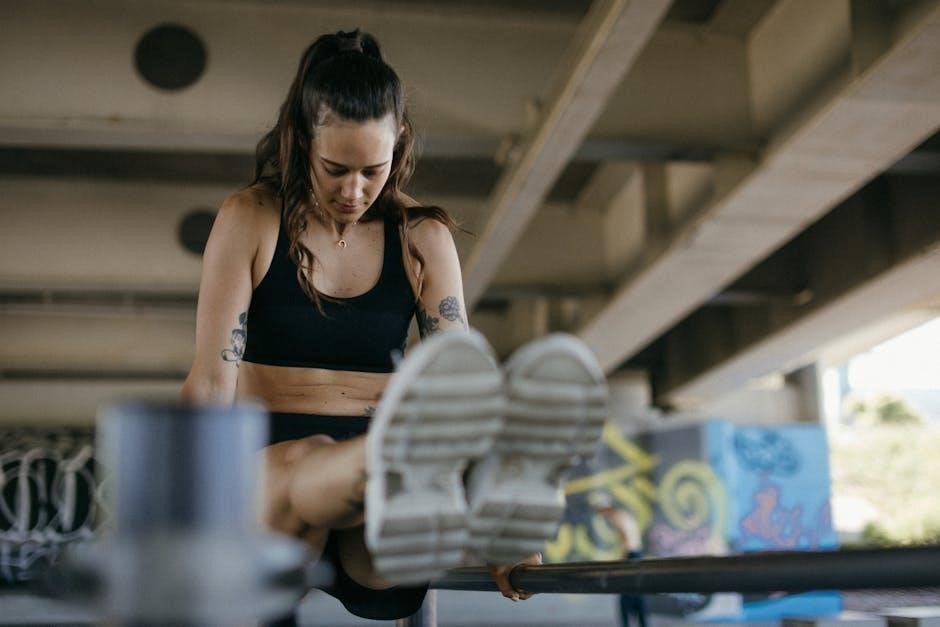
Begin with bodyweight pulling exercises such as inverted rows under a sturdy table or using a doorway pull-up bar. Focus on squeezing the shoulder blades together and pulling with your back muscles, not just your arms.
Progress to more challenging variations like pull-ups and chin-ups, utilizing assistance bands if needed. Explore different grip widths to target various muscle groups. Remember to control the eccentric (lowering) phase of the movement.
Pulling exercises enhance posture and counteract the effects of prolonged sitting, promoting spinal health and overall body alignment.
Crawling
Crawling is a foundational primal movement often overlooked in modern fitness routines. It’s a full-body exercise that builds core stability, shoulder strength, and coordination. This movement pattern reflects how infants explore their environment and develop motor skills, representing a fundamental aspect of human development.
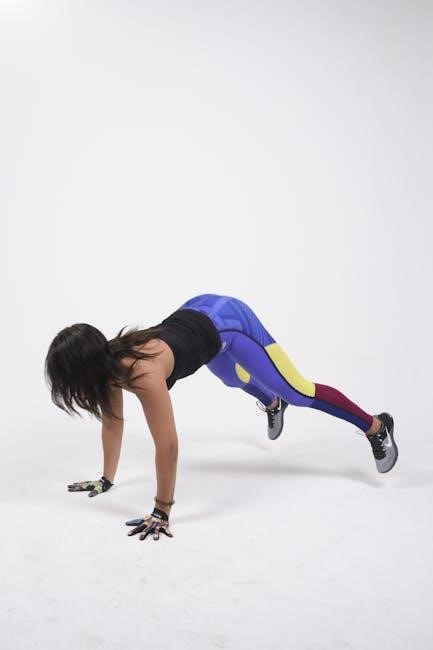
Start with bear crawls, maintaining a low position with hands and feet on the ground, moving opposite arm and leg simultaneously. Focus on keeping your back flat and core engaged.
Progress to more challenging variations like leopard crawls (faster pace, lower to the ground) and crab walks (moving sideways). These variations demand greater core control and coordination.
Crawling improves proprioception – your body’s awareness of its position in space – and enhances functional movement patterns. It’s a fantastic way to challenge your body in a unique and effective manner.
Rolling
Rolling, a seemingly simple movement, is a powerful primal pattern often neglected in conventional workouts. It’s deeply connected to infant development and fosters spinal mobility, core engagement, and body awareness. This movement encourages a fluid, three-dimensional approach to movement, breaking away from rigid, planar exercises.
Begin with gentle log rolls, keeping your body compact and controlled. Focus on initiating the movement from your core, not just momentum. Maintain a rounded spine throughout the roll.
Progress to shoulder rolls, which challenge shoulder mobility and stability. These can be performed on a soft surface for comfort.
Rolling enhances proprioception and improves the ability to move efficiently in various planes of motion. It’s a fantastic way to ‘reset’ the spine and improve overall movement quality, promoting a more natural and instinctive way to move.
Designing a Primal Movement Workout
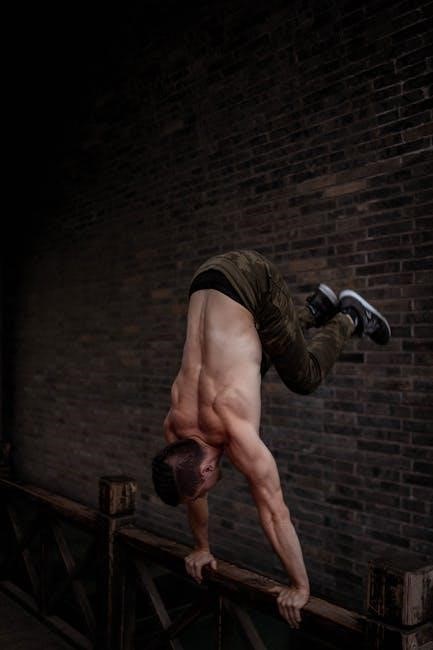
Craft workouts mirroring natural human movement! Prioritize fluidity and instinct, incorporating squats, hinges, pushes, pulls, crawls, and rolls for a balanced, effective routine.
Warm-up Exercises for Primal Movement
Preparing your body is crucial! A dynamic warm-up primes muscles and joints for primal movement patterns, enhancing performance and minimizing injury risk. Begin with gentle joint rotations – ankles, wrists, hips, and shoulders – to increase circulation and range of motion.
Follow with foundational movements like cat-cow stretches to mobilize the spine, and torso twists to improve rotational flexibility. Ground-based movements are key; incorporate crawling variations (bear crawls, baby crawls) to activate core stability and shoulder girdle strength.
Dynamic stretches such as leg swings (forward, backward, and lateral) and arm circles further prepare the muscles. Include bodyweight squats and hip hinges, focusing on controlled movement and proper form. Aim for 5-10 minutes of these exercises before each primal movement session, gradually increasing intensity.
Sample Primal Movement Workout Routine
Embrace natural movement! This routine focuses on fundamental patterns, building strength, mobility, and body awareness. Begin with a dynamic warm-up (see previous section). The core of the workout involves flowing transitions between primal movements.
Circuit Example: Perform each exercise for 45 seconds, followed by 15 seconds of rest. Repeat the circuit 3-4 times. Include squats, hip hinges (Romanian deadlifts with bodyweight), push-ups (modified on knees if needed), bear crawls (10-15 feet), and rolling (log rolls or shoulder rolls).
Focus on quality over quantity. Prioritize proper form and controlled movements. Listen to your body and modify exercises as needed. Cool down with static stretches, holding each stretch for 30 seconds. Remember hydration and mindful breathing throughout the workout.
Beginner Level Routine
Start slowly and build a foundation! This routine emphasizes foundational movements and gentle exploration. Begin with 5 minutes of light cardio, like walking or marching in place. Focus on mastering the basic patterns before adding complexity.
Workout Structure: Perform 2 rounds of the following circuit, with 60 seconds rest between rounds. Include bodyweight squats (8-10 reps), hip hinges (focus on form, 8-10 reps), wall push-ups (8-10 reps), tabletop crawls (5-10 feet), and gentle side rolls (5 reps per side).
Prioritize form and control. If any exercise causes pain, modify it or skip it. Focus on connecting with your body and moving with intention. Finish with 5 minutes of static stretching, holding each stretch for 20-30 seconds. Hydrate well before and after!
Intermediate Level Routine
Elevate your practice with increased intensity! This routine builds upon the beginner level, introducing more challenging variations and increasing the volume. Begin with a dynamic warm-up of 5-10 minutes, including arm circles, leg swings, and torso twists.
Workout Structure: Perform 3 rounds of the following circuit, with 45-60 seconds rest between rounds. Include squats (12-15 reps), Romanian deadlifts (with light weight if available, 10-12 reps), incline push-ups (10-12 reps), bear crawls (10-15 feet), and controlled rolls (8 reps per side).
Focus on core engagement and smooth transitions. Incorporate pauses at the bottom of squats and during push-ups to increase time under tension. Cool down with 5-10 minutes of focused stretching, paying attention to areas that feel tight. Remember proper hydration!
Advanced Level Routine
Push your limits with complex and dynamic movements! This routine demands a solid foundation in primal movement patterns. Begin with a thorough 10-15 minute dynamic warm-up, including spiderman stretches, world’s greatest stretch, and active shoulder mobility drills.
Workout Structure: Complete 4 rounds of the following circuit, resting 60-90 seconds between rounds. Include pistol squats (6-8 reps per leg), single-leg Romanian deadlifts (8-10 reps per leg), decline push-ups (10-15 reps), crab walks (15-20 feet), and full body rolls (10 reps per side).
Prioritize controlled movements and mindful breathing. Add resistance with a weighted vest or band where appropriate. Finish with a 10-minute static stretching routine, holding each stretch for 30 seconds. Listen to your body and adjust as needed.
Resources for Primal Movement Workouts (PDFs & Online)
Unlock a wealth of training materials! Numerous PDFs and online programs offer structured primal movement workouts, catering to diverse fitness levels and goals.
Explore curated resources. Discover expertly designed routines to enhance your mobility, strength, and overall well-being through natural movement patterns.
Finding Primal Movement Workout PDFs
Accessing structured primal movement routines is easier than ever with the abundance of downloadable PDFs available online. A simple web search using keywords like “primal movement workout PDF,” “natural movement PDF,” or “animal flow workout PDF” will yield a variety of options.
Many fitness professionals and movement coaches offer free introductory PDFs as a way to showcase their expertise and attract clients. These often include beginner-friendly routines focusing on fundamental patterns like squats, hinges, pushes, and pulls. Look for PDFs that clearly demonstrate proper form and offer modifications for different fitness levels.
Websites dedicated to functional fitness and holistic wellness frequently host downloadable resources. Be sure to vet the source and ensure the PDF is created by a qualified instructor. Consider checking fitness forums and online communities where users often share their favorite primal movement workout PDFs and experiences. Remember to prioritize safety and listen to your body when following any new workout routine.
Popular Online Primal Movement Programs
Beyond free PDFs, several comprehensive online programs offer structured primal movement training. These platforms typically provide video instruction, progressive routines, and often, community support. One notable option is Move Naturally, offering a range of courses focused on restoring natural movement patterns.
Animal Flow is another popular program, blending ground-based movement with elements of gymnastics, breakdancing, and parkour. It’s known for its dynamic and challenging routines, available through their official website and certified instructors.
Functional Movement Systems (FMS), while not solely primal movement focused, incorporates principles of natural movement assessment and correction. Several online platforms offer FMS-inspired workouts. Be mindful of subscription costs and program intensity when choosing a program. Many offer free trials or introductory content, allowing you to assess suitability before committing. Prioritize programs with qualified instructors and a focus on safe, progressive training.
Safety Considerations & Modifications
Primal movement, while natural, requires mindful execution. Begin slowly, focusing on form over speed or intensity. Listen to your body and respect its limitations – pain is a signal to stop or modify the exercise.
Individuals with pre-existing conditions (joint issues, injuries, etc.) should consult a healthcare professional before starting. Modifications are crucial; scale movements to your current ability. For example, a full squat can be modified to a partial squat or assisted squat using a chair.
Proper warm-up and cool-down are essential to prepare muscles and joints. Avoid pushing through sharp pain. Downloadable PDFs often lack personalized guidance; consider supplementing with video instruction to ensure correct form. Prioritize controlled movements and gradual progression to minimize risk of injury. Remember, consistency and proper technique are key to reaping the benefits of primal movement safely.