
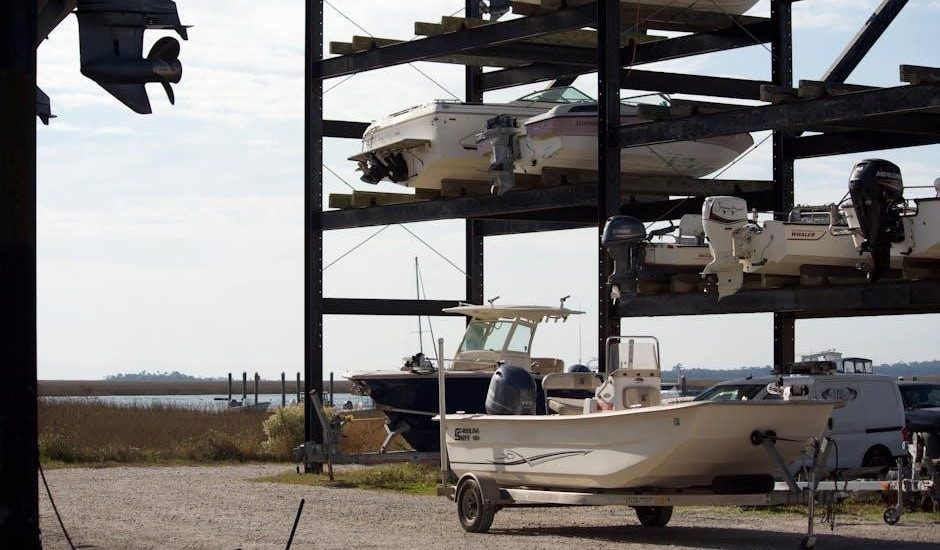
What is a Boat Trailer Bow Guide?
A boat trailer bow guide centers the vessel during winch operation, preventing damage. It utilizes rollers or posts to align the boat’s bow with the trailer’s winch stand.
These systems, like the 3 Bow Bell Roller Assembly, aid in single-person launching and recovery, ensuring secure transport and minimizing potential hull abrasions.
Definition and Purpose
A boat trailer bow guide is a crucial component designed to facilitate the safe and efficient loading and unloading of boats onto a trailer. Essentially, it’s a system – often incorporating rollers, posts, or a combination of both – strategically positioned at the bow (front) of the trailer.
Its primary purpose is to center the boat’s hull as it’s being winched onto the trailer, preventing damaging contact with the trailer frame or winch stand. This is particularly important for solo operators, as a bow guide allows for one-person launching and retrieval. Components like the “3 Bow Bell Roller Assembly” utilize durable materials like TPR to gently guide the boat, minimizing potential scratches or dents.
Ultimately, a bow guide ensures proper alignment, contributing to a secure and stable transport experience.
Why Use a Bow Guide?
Employing a boat trailer bow guide offers significant advantages for boat owners. Primarily, it drastically reduces the risk of damage to the boat’s hull during loading and unloading. Without a guide, the bow can easily collide with the trailer’s winch stand or frame, causing costly repairs.
Furthermore, a bow guide simplifies the launching and retrieval process, especially for individuals operating alone. Systems utilizing features like a line attached to the bow, running over a post, and connecting to a guide arm, enable single-person operation.
Proper centering also ensures balanced weight distribution during transport, enhancing trailer stability and overall safety on the road.

Types of Boat Trailer Bow Guides
Boat trailer bow guides come in several forms: roller, post, adjustable, and fixed. Each design offers unique benefits for different boat types and trailer setups.
Roller Bow Guides
Roller bow guides are a popular choice, employing multiple rollers to cradle and center the boat’s bow. These guides, often constructed from durable thermal plasticized rubber (TPR) like the 3 Bow Bell Roller Assembly, provide a forgiving contact point.
This design minimizes stress on the hull during the winching process, preventing scratches and damage. The rollers smoothly guide the boat onto the trailer, even in less-than-ideal conditions. They are particularly effective for boats with varying hull shapes and are known for their ease of use and ability to accommodate slight misalignments during loading. Regular inspection of the rollers is crucial to ensure optimal performance and prevent wear.
Post Bow Guides
Post bow guides utilize vertical posts, typically covered in protective material, to direct the boat’s bow onto the trailer. A common setup involves a line attached to the boat’s bow, running over a post, and connecting to the trailer tongue. This allows for controlled launching and retrieval, even by a single person.
While simpler in design than roller guides, post guides require more precise alignment during maneuvering. They are often found on trailers designed for specific boat models. The posts must be robust enough to withstand the force of the boat during loading and unloading, and the protective covering prevents hull damage.
Adjustable Bow Guides
Adjustable bow guides offer versatility, accommodating various boat sizes and hull shapes. These systems typically feature posts or rollers mounted on adjustable brackets, allowing the user to customize the guide’s position. This is particularly useful for trailers that transport multiple boat types or for boats with varying bow profiles.
The adjustability ensures optimal centering during winching, minimizing the risk of damage. Mechanisms can range from simple bolt adjustments to more sophisticated sliding or ratcheting systems. Properly adjusted guides enhance the efficiency of loading and unloading, contributing to a safer and more convenient boating experience.
Fixed Bow Guides
Fixed bow guides represent a simpler, more economical option for boat trailers. These systems consist of permanently mounted posts or rollers, designed to accommodate a specific boat size and shape. While lacking the versatility of adjustable guides, they provide reliable centering when used with a compatible vessel.
Their straightforward design often translates to easier installation and lower maintenance requirements. However, it’s crucial to select a fixed guide that precisely matches the boat’s bow profile to ensure effective guidance during winching. Incorrectly sized fixed guides may not adequately center the boat, potentially leading to damage during transport.

Components of a Bow Guide System
Essential components include the bow roller assembly, sturdy guide posts, a reliable winch stand, and securing elements like straps or bungees for safe boat transport.
Bow Roller Assembly
The bow roller assembly is a critical element, designed to facilitate smooth boat loading and centering onto the trailer. Typically constructed from durable materials like thermal plasticized rubber (TPR), these assemblies help prevent direct contact between the boat’s bow and the trailer’s winch stand.
These rollers effectively guide the boat, ensuring proper alignment during the winching process. A well-maintained roller assembly minimizes the risk of scratches or damage to the hull. The 3 Bow Bell Roller Assembly is an example of a robust design, offering reliable performance and contributing to a secure and efficient loading experience. Proper installation and regular inspection are vital for optimal functionality.

Guide Posts
Guide posts work in conjunction with the bow roller to create a secure channel for the boat’s bow during the loading process. Often paired, these posts help to actively steer the boat towards the center of the trailer, preventing lateral movement and ensuring accurate positioning.
A line attached to the boat’s bow, running over these posts and connecting to the trailer tongue, can enable single-person launching and retrieval. The posts’ height and placement are crucial for effective guidance, accommodating various boat sizes and hull shapes. Durable construction is essential to withstand repeated use and environmental exposure, contributing to a safe and efficient trailering experience.
Winch Stand
The winch stand is a fundamental component, providing the mounting point for the winch and serving as the focal point for boat loading. It’s typically positioned centrally on the trailer tongue, aligned with the boat’s bow. A robust winch stand ensures stability during the winching process, preventing unwanted movement or tilting.
The Adaptor Plate assembly connects the winch to the trailer hitch. Proper height adjustment of the winch stand is critical for achieving the optimal winching angle, minimizing stress on the winch and the boat’s bow eye. Securely fastened, the winch stand contributes significantly to the overall safety and efficiency of boat trailering.
Straps and Bungees
Straps and bungees act as secondary securing mechanisms, complementing the bow guide and winch. While the bow guide centers the boat, straps prevent excessive movement during transport, particularly on bumpy roads. Bungees offer a lighter-duty securing option for shorter distances or calmer conditions.
A line attached to the boat’s bow, fed over a post, and secured to the trailer tongue provides an additional layer of safety. These components should be regularly inspected for wear and tear, ensuring they maintain adequate tension and integrity. Proper use of straps and bungees minimizes the risk of the boat shifting or becoming detached during travel.
Installation of a Boat Trailer Bow Guide
Installing a bow guide involves securing guide posts, attaching the bow roller to the trailer’s tongue, and firmly mounting the winch stand for optimal boat loading.
Tools Required
Successfully installing a boat trailer bow guide demands a specific set of tools for a secure and efficient process. Essential items include a socket wrench set, capable of handling various bolt sizes commonly found in trailer construction. A drill with a selection of drill bits is crucial for creating mounting holes in the trailer frame.
Furthermore, a torque wrench ensures bolts are tightened to the manufacturer’s specifications, preventing loosening during transport. A measuring tape is needed for accurate placement of components, while a level guarantees the guide posts are vertically aligned. Safety glasses are paramount to protect your eyes from debris. Finally, having a rubber mallet can assist with gently positioning parts without causing damage.
Mounting the Guide Posts
Securely mounting the guide posts is fundamental to the bow guide’s functionality. Begin by positioning the posts on the trailer frame, ensuring they are aligned with the boat’s bow and spaced appropriately for optimal centering. Utilize the pre-drilled holes in the posts, or carefully mark and drill new ones through the trailer frame.
Employ bolts and washers to firmly attach the posts, tightening them with a torque wrench to the manufacturer’s recommended specifications. Double-check that the posts are vertically plumb using a level. Reinforce the mounting points with backing plates if necessary, particularly on thinner trailer frames, to distribute the load and prevent bending or failure during transport.
Attaching the Bow Roller
Securing the bow roller assembly is crucial for smooth boat loading. Typically, the roller mounts to the trailer’s tongue or a dedicated bracket. Align the roller so it sits slightly below the boat’s keel line, facilitating easy engagement during winching.
Use appropriate bolts and washers, ensuring they are tightened securely. A durable thermal plasticized rubber (TPR) bow bell assembly, like those mentioned, helps center the boat and prevent contact damage. Verify the roller rotates freely and is properly lubricated. A line attached to the boat’s bow, running over the post and hooking onto the tongue, can aid in single-person operation.
Securing the Winch Stand
The winch stand provides the anchor point for the winching cable and supports the boat’s bow during transport. It’s typically bolted to the trailer frame, ensuring robust stability. Attach the winch/adaptor plate assembly to the trailer hitch, inserting the ball through the shaped hole in the plate.

Confirm the stand is vertically aligned and can withstand the boat’s weight. Regularly inspect the mounting bolts for tightness. A properly secured winch stand, combined with a functioning bow roller, creates a safe and efficient loading system. Consider using straps or bungees for added security during travel.
Maintenance and Care
Regular inspection of the bow guide is crucial for longevity. Lubricate moving parts, and promptly replace worn rollers or straps to ensure optimal performance and safety.
Regular Inspection
Consistent visual checks are paramount for maintaining a functional boat trailer bow guide. Before each use, thoroughly inspect the entire system for any signs of wear, damage, or corrosion. Pay close attention to the rollers – look for cracks, flat spots, or looseness in their mounting. Examine the guide posts for bends or breaks, and verify that all bolts and fasteners are securely tightened.
Check the winch stand for structural integrity and ensure the winch operates smoothly. Inspect straps and bungees for fraying, tears, or loss of elasticity. Early detection of issues prevents more significant problems during loading and transport, safeguarding both your boat and trailer. A proactive approach to inspection extends the lifespan of the bow guide system.
Lubrication
Regular lubrication is crucial for the smooth operation and longevity of your boat trailer bow guide. Focus on the moving parts – specifically, the bearings within the rollers. Apply a marine-grade grease to these bearings at least once a season, or more frequently with heavy use. This reduces friction and prevents corrosion, ensuring effortless boat centering during winching.
Don’t neglect the winch mechanism; a few drops of lubricant will maintain its smooth function. Inspect and lubricate any pivot points on the guide posts as well. Avoid using general-purpose lubricants, as they may not withstand the marine environment. Marine-specific products offer superior protection against saltwater and the elements, preserving the integrity of your bow guide system.
Replacing Worn Parts
Regular inspection reveals when bow guide components need replacing. Worn rollers are a common issue; look for cracks, flat spots, or difficulty rotating. Replace them promptly to prevent damage to your boat’s hull during loading. Similarly, check guide posts for bends or corrosion, swapping them out if compromised.
Worn straps and bungees lose elasticity and can fail, so inspect and replace them annually. A damaged winch stand requires immediate attention, as it directly impacts safety. Prioritize using high-quality replacement parts designed for marine applications to ensure durability and compatibility. Ignoring worn components can lead to costly repairs and potential accidents.
Troubleshooting Common Issues
Common problems include boats not centering, winch malfunctions, and roller difficulties. Addressing these promptly ensures safe loading and transport, preventing potential damage to your vessel.
Boat Not Centering
If your boat consistently fails to center on the trailer during winching, several factors could be at play. First, inspect the bow roller assembly for wear or damage; a worn roller won’t guide the boat effectively. Second, ensure the guide posts are properly aligned and haven’t been bent or shifted during transport.
Additionally, check the winch cable for fraying or kinks, as these can cause uneven pulling. Sometimes, adjusting the position of the guide posts slightly can resolve minor centering issues. Finally, confirm the trailer is level; an unlevel trailer can exacerbate centering problems. A properly functioning bow guide, like those utilizing TPR, should minimize this issue.
Winch Issues
Winch problems often stem from a lack of lubrication or a damaged winch mechanism. First, inspect the winch gears and ratcheting pawl for wear and tear, replacing them if necessary. Second, ensure the winch cable is properly spooled and free of kinks or fraying, as this can impede smooth operation.
Regularly lubricating the winch with a marine-grade grease is crucial for preventing corrosion and ensuring effortless operation. If the winch handle is difficult to turn, or the cable slips, it’s a sign of internal issues; Remember, a properly functioning winch, paired with a reliable bow guide, is essential for safe boat loading and transport.
Roller Problems
Roller issues on a boat trailer bow guide typically involve wear, corrosion, or blockage. First, inspect the rollers for cracks, flat spots, or excessive play, as these can hinder proper boat centering; Second, ensure the rollers rotate freely; debris like sand or barnacles can cause them to bind.
Regularly cleaning and lubricating the roller assemblies with a marine-grade lubricant is vital for smooth operation and longevity. If a roller is severely damaged, replacement is necessary to prevent damage to the boat’s hull. Remember, durable thermal plasticized rubber (TPR) bow bell assemblies, like those mentioned, are designed for centering and preventing contact.

Choosing the Right Bow Guide for Your Boat
Selecting the ideal bow guide depends on your boat’s size, weight, and the trailer type. Consider material durability and ensure compatibility for safe transport.
Boat Size and Weight
Determining the appropriate bow guide necessitates careful consideration of your boat’s dimensions and overall weight. Larger, heavier vessels require robust guides capable of providing substantial support and precise centering during the winching process. A smaller boat, like the Tracker 16 Pro Guide V 16, may only need a simpler, lighter-duty system.
The capacity of the bow roller assembly and guide posts must exceed the boat’s weight to prevent stress and potential failure. Ignoring these factors can lead to damage during loading or unloading, and compromise the safety of the entire transport process. Always prioritize a guide system rated for, or exceeding, your boat’s specifications.
Trailer Type
The type of boat trailer significantly influences the compatibility and effectiveness of a bow guide system. Tandem trailers, like the Trailstar mentioned with the Tracker 16 Pro Guide V 16, often require guides designed for longer distances between the trailer hitch and the bow. Single-axle trailers may necessitate a more compact setup.
Consider whether your trailer has a dedicated winch stand or utilizes an adaptor plate system. The mounting points and available space will dictate the type of guide posts and roller assemblies that can be installed. Ensure the chosen bow guide integrates seamlessly with your trailer’s existing structure for optimal performance and safety.
Material Considerations
Bow guide materials must withstand marine environments and constant friction. Durable thermal plasticized rubber (TPR), as seen in the 3 Bow Bell Roller Assembly, is a popular choice for rollers due to its cushioning and resistance to wear. Steel or aluminum are common for guide posts and winch stand components, offering strength and corrosion resistance.
Consider galvanized steel for enhanced durability, especially in saltwater applications. The quality of materials directly impacts the longevity and reliability of the bow guide system. Prioritize corrosion-resistant options to prevent rust and ensure smooth operation for years to come, minimizing maintenance needs.

Safety Considerations
Secure the boat firmly during transport using proper winching techniques and straps. Avoid damaging the hull by ensuring correct bow guide alignment and preventing excessive force.
Proper Winching Techniques
Effective winching is crucial for safe boat transport. Begin by ensuring the winch cable is properly spooled and in good condition, free from kinks or fraying. Attach the winch hook securely to the boat’s bow eye, verifying a solid connection before applying any tension.
Crank the winch handle smoothly and steadily, avoiding jerky motions that could shock the system or damage the boat. Utilize the bow guide to center the boat as it’s being winched onto the trailer, preventing lateral stress.
Never exceed the winch’s rated capacity, and always double-check the security of the winch strap or cable after each adjustment. A properly executed winch operation, combined with a functional bow guide, minimizes the risk of accidents and ensures a secure journey.
Avoiding Damage to the Boat
Protecting your boat’s finish during trailering is paramount. A properly installed and maintained bow guide system, like those utilizing TPR bow bell assemblies, significantly reduces the risk of hull abrasions. Ensure the guide’s rollers or posts are clean and free of debris that could scratch the gelcoat.
Avoid excessive winching speed, as sudden movements can cause the boat to impact the trailer or bow guide forcefully. Regularly inspect the winch strap and cable for wear, replacing them promptly if damaged.
Proper centering with the bow guide prevents unwanted contact during transport, safeguarding against costly repairs and preserving your boat’s value.
Securing the Boat During Transport
Beyond the bow guide, comprehensive boat security during transport is crucial. After centering the boat with the guide and winching it snugly onto the trailer, utilize straps and bungees to further stabilize the vessel. These should be attached to strong points on both the boat and the trailer frame.
Double-check that the winch cable is securely fastened and that the safety latch is engaged. Consider using transom straps to prevent the boat from shifting rearward, especially on bumpy roads.
Regularly inspect these securing devices throughout your journey, ensuring they remain taut and effective in preventing movement.